

Lessons
2 classes
Class time
No matter what we do as artists, we have to, once in a while, go back to sketching. The value of this project goes beyond just learning to draw the body fast and accurately. The new facility to render momentarily and successfully what’s in front of you will encourage you to look forward to sketching everywhere and everything: your friends and family, your pets who don’t sit still, in coffee shops and on trains when travelling, etc. Dive into this two-part course to train your hand-eye coordination and enjoy the beauty of sketching!
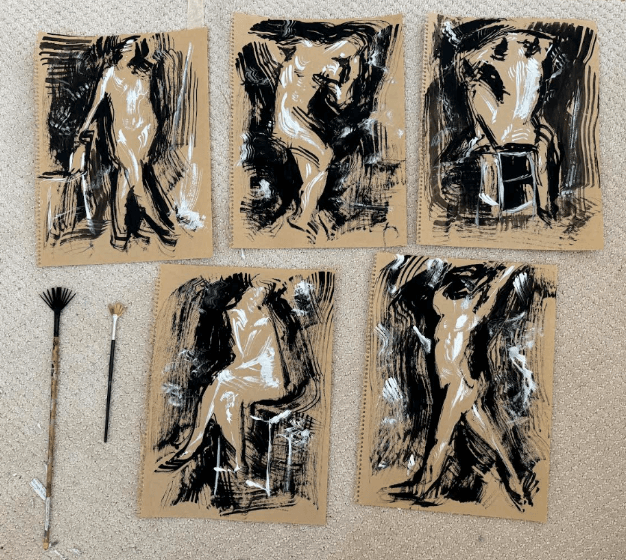
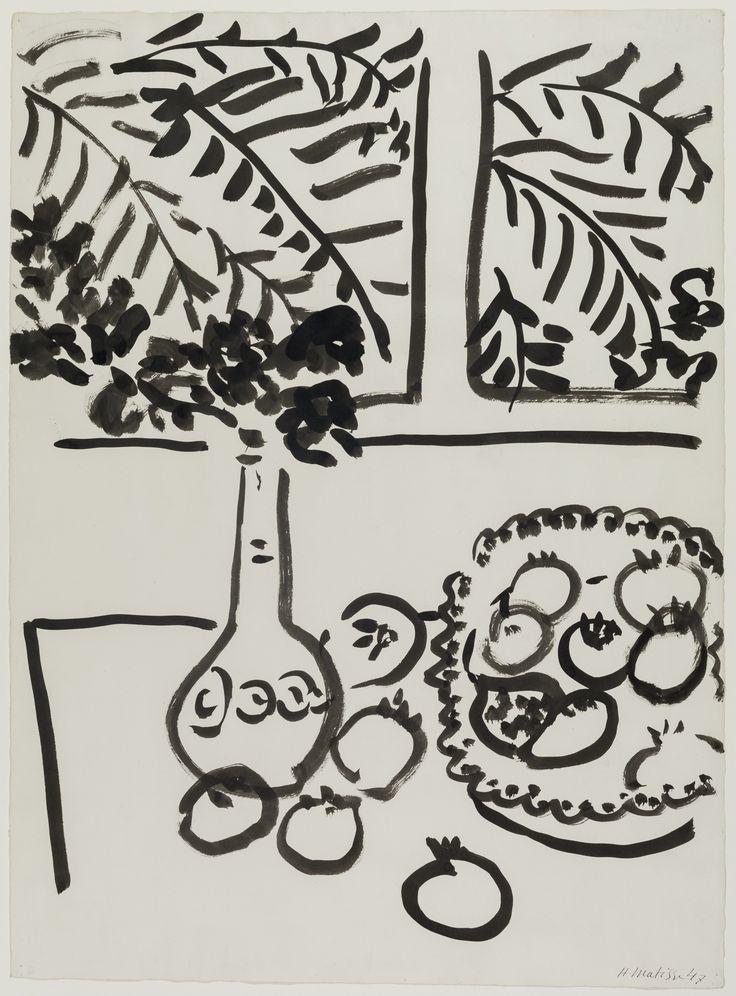
No matter what we do as artists, we have to, once in a while, go back to sketching: this is how we learn to draw rapidly, develop our eye-hand coordination, stop our “internal judge” from controlling our hand, find blissful effortlessness, and switch to the creative hemisphere of the brain. Of course the transition does not happen at once: it takes time and effort. Delving into this intense pace of sketching for the continuum of two classes, you will achieve this new level of ability. The value of this project goes beyond just learning to draw the body fast and accurately. The new facility to render momentarily and successfully what’s in front of you will encourage you to look forward to sketching everywhere and everything: your friends and family, your pets who don’t sit still, in coffee shops and on trains when traveling, etc. Sketching with brushes - instead of the “safe” charcoal or pencil - is a strategy based on psychology: our mind learns to adjust to discomfort and finds comfort and enjoyment.
Sketching is one thing that you can do every day. You can do a sketch literally in seconds. For the materials, you don’t need anything fancy. You can do it while doing other things: eating breakfast, talking on the phone, while you are cooking, watching TV. It’s not labor-intensive.
Practicing quick-hand sketching allows you to explore ideas freely, without being committed to every detail, helping you to brainstorm and develop concepts, refine your vision before committing to a final piece, all while improving the observation skills and fostering creativity. Through visual expression, essentially, it’s a way to experiment and capture ideas in a low-pressure environment.
Through sketching, people overcome specific obstacles. This is what my student Paivi said about sketching:
“I always thought that I couldn’t draw. When you told me that I would be sketching on a large canvas with a brush and black paint, I was surprised! I thought that it would be stressful, but after you showed me and explained how to do it, to my surprise, it worked, and I was able to create several works by sketching on canvas without any pencil drawing. Sketching improved my painting too. It was the most profound experience!”
In this course you are going to get confidence and speed, and also authority. Sketching develops drawing ability better and faster than careful detailed drawing.
Key reasons to sketch:
Idea generation
Easily jot down thoughts, concepts, and design ideas without getting bogged down by technicalities.
Visual communication
Effectively convey complex ideas through visual representation
Observation practice
Improves your ability to see and interpret details in the world around you
Creative exploration
Experiment with different styles and approaches without worrying about perfection
Problem solving
Work through design challenges by visually testing different solutions
Stress relief
Engaging in the act of sketching can be calming and meditative
Personal expression
Capture your unique perspective and experiences through art
Eye-hand coordination
Sketching will build your self-confidence
It’s worth the effort to make time in your schedule to take this course.
Don’t let another year go by.
2 classes in this course
Not sure which course?
Become a member and unlock all these courses and more!